Peptide Purity Determination Creative Peptides-peptide Drug Discovery
Exactly How To Read A Peptide Purity Test: Hplc, Mass Spectrometry And Coa Analysis For Uk Scientists 2026
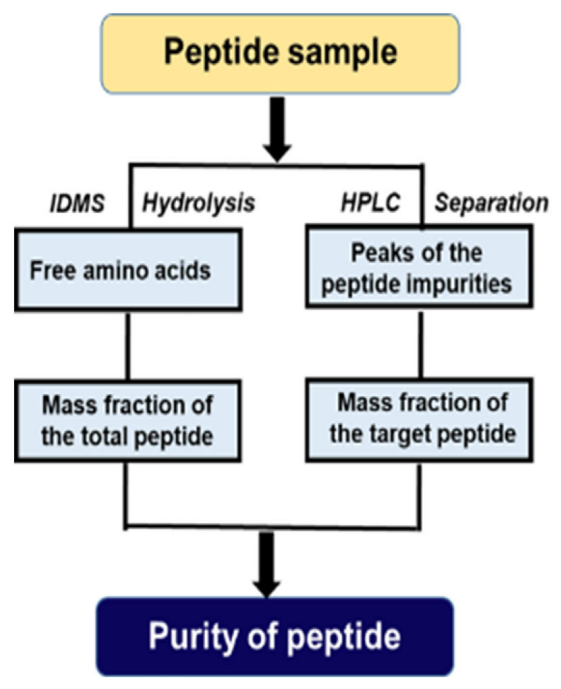
- Partial peptide pieces can result from incomplete synthesis or post-synthesis destruction.
- In straightforward terms, a peptide detailed as 95% pure is composed primarily of the target peptide (95%), with the staying ~ 5% comprised of contaminations.
- Apex Research laboratory is a specialized vendor of high-purity chemical reagents and peptides.
- HPLC can support cases about chromatographic purity, pollutant optimal concern, and destruction trends when the method is ideal and the chromatogram is available.
Peptide Practical Analysis In Biomedical Research
By insisting on peptides that include verification of pureness and identity, researchers can greatly minimize the threat of speculative artefacts. Alternatively, making use of peptides that have passed third-party Great site laboratory recognition helps make sure that the observed experimental impacts are genuinely because of the designated peptide and not as a result of contaminants or mistakes. When you see peptides marketed as "research-grade," it describes their planned usage and the level of manufacturing oversight. Research-grade peptides are created research laboratory study use only-- they are not produced under pharmaceutical GMP standards and are not indicated for use as therapeutics or in human beings. These peptides feature a fundamental quality control plan, generally including HPLC purity evaluation and MS verification of identity, guaranteeing they fulfill clinical criteria for purity and make-up.
Accurate resolution of the pI through capillary isoelectric concentrating (cIEF) aids in peptide characterization and is essential for applications where peptide cost impacts function and security. We aid distinguish chromatographic purity from real peptide amount so customers can prepare options and contrast lots with better self-confidence. We select approaches according to peptide length, hydrophobicity, fee account, and modification standing instead of forcing every example right into one theme.Either can be acceptable, but third-party screening is the gold requirement for research-grade materials. Residual solvents, such as DMF, acetonitrile, or DMSO, are quantified making use of gas chromatography (GC) methods. These solvents can impact peptide functionality, so precise quantification is vital to make certain purity and avoid contamination in experimental settings. Peptide stability is assessed under various problems to make sure reliability throughout research study and product growth.
Why Should Scientists Require Third-party Validation?
For scientists, getting confirmed peptides isn't simply a formality-- it's the foundation of reputable experiments and study reproducibility. Poor-quality peptides (those with unseen impurities, inaccurate sequences, or broken down components) can bring about misleading information and irreproducible outcomes. As a matter of fact, proteins and peptides are amongst the most commonly used laboratory reagents, yet research studies have revealed that their top quality is typically inadequate, leading to inadequate information reproducibility. Starting with correct lab validation is as a result a crucial part of a researcher's quality control operations.
In theory, peptide pureness is evaluated by the chromatogram generated by reversed stage HPLC, and furthermore, we can acquire the number and loved one amount of feasible byproducts by calculating the peak location. A top notch chromatogram has a solitary, symmetrical primary top with a flat baseline on either side. " Tailing"-- where the optimal routes off gradually on one side-- can suggest column issues, example overloading, or secondary communications in between the peptide and the fixed phase. In this arrangement, the stationary phase is hydrophobic (water-repelling), typically C18-bonded silica. The mobile phase is a gradient of water and an organic solvent like acetonitrile, commonly with a small amount of trifluoroacetic acid (TFA) to sharpen the tops.Suggested Tests By Analytical Objective

The software draws limits around each peak and computes the area underneath. The pureness percentage comes from contrasting the area of the primary optimal to the complete area of all identified optimals. A lot of reports consist of a table listing each optimal's retention time, location, and percentage of overall area.
With each other, GHK-Cu these analytical methods give the proof base for concluding that a peptide set is suitable for study use. One more associated term you might experience is web peptide material, which is different from purity. Web peptide material describes just how much actual peptide (by weight) is in the vial about non-peptide components like water, counter-ions (e.g., TFA), or barrier salts.